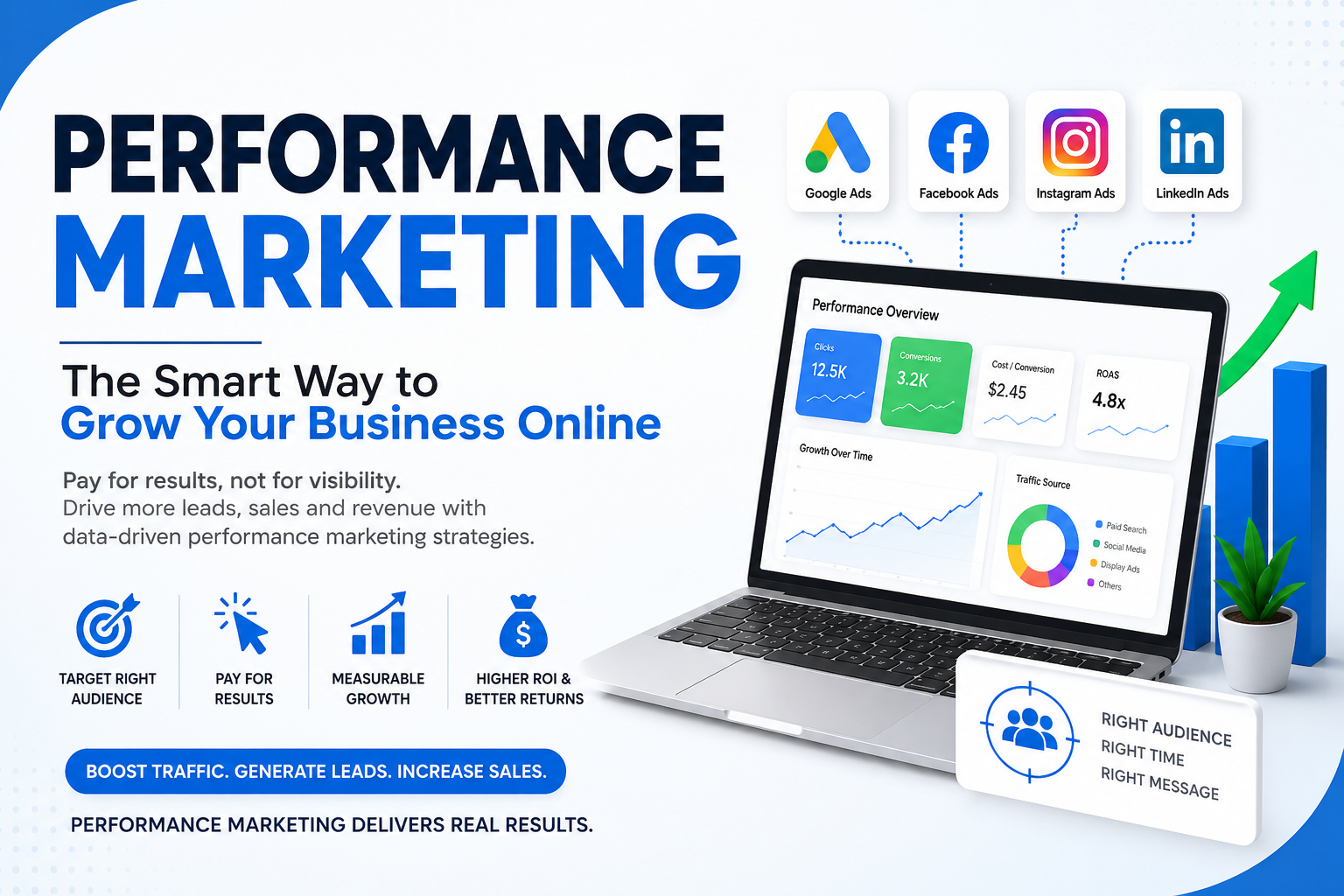
Performance marketing has become one of the most powerful digital marketing strategies for businesses in 2026. Unlike traditional advertising, performance marketing focuses on measurable results such as clicks, leads, sales, and conversions. Businesses only pay when a specific action is completed, making it a cost-effective and result-driven marketing method.
Today, companies of all sizes use performance marketing to increase brand visibility, attract targeted customers, and boost online sales. With the growth of digital platforms like Google, Facebook, Instagram, YouTube, and LinkedIn, performance marketing has transformed how brands connect with their audience.
What is Performance Marketing?
Performance marketing is a digital advertising strategy where advertisers pay based on campaign performance. These performances can include:
- Website clicks
- Lead generation
- Product sales
- App downloads
- Form submissions
- Email sign-ups
-
This marketing model helps businesses track every campaign result accurately. It also allows marketers to optimize campaigns for better return on investment (ROI).
Importance of Performance Marketing
Performance marketing is important because it delivers real and measurable outcomes. Businesses can monitor campaign performance in real-time and make changes instantly to improve results.
Some major benefits include:
- Better targeting
- Increased online visibility
- Higher conversion rates
- Budget control
- Real-time analytics
- Improved ROI
Unlike traditional marketing, there is less risk because businesses only spend money on successful actions.
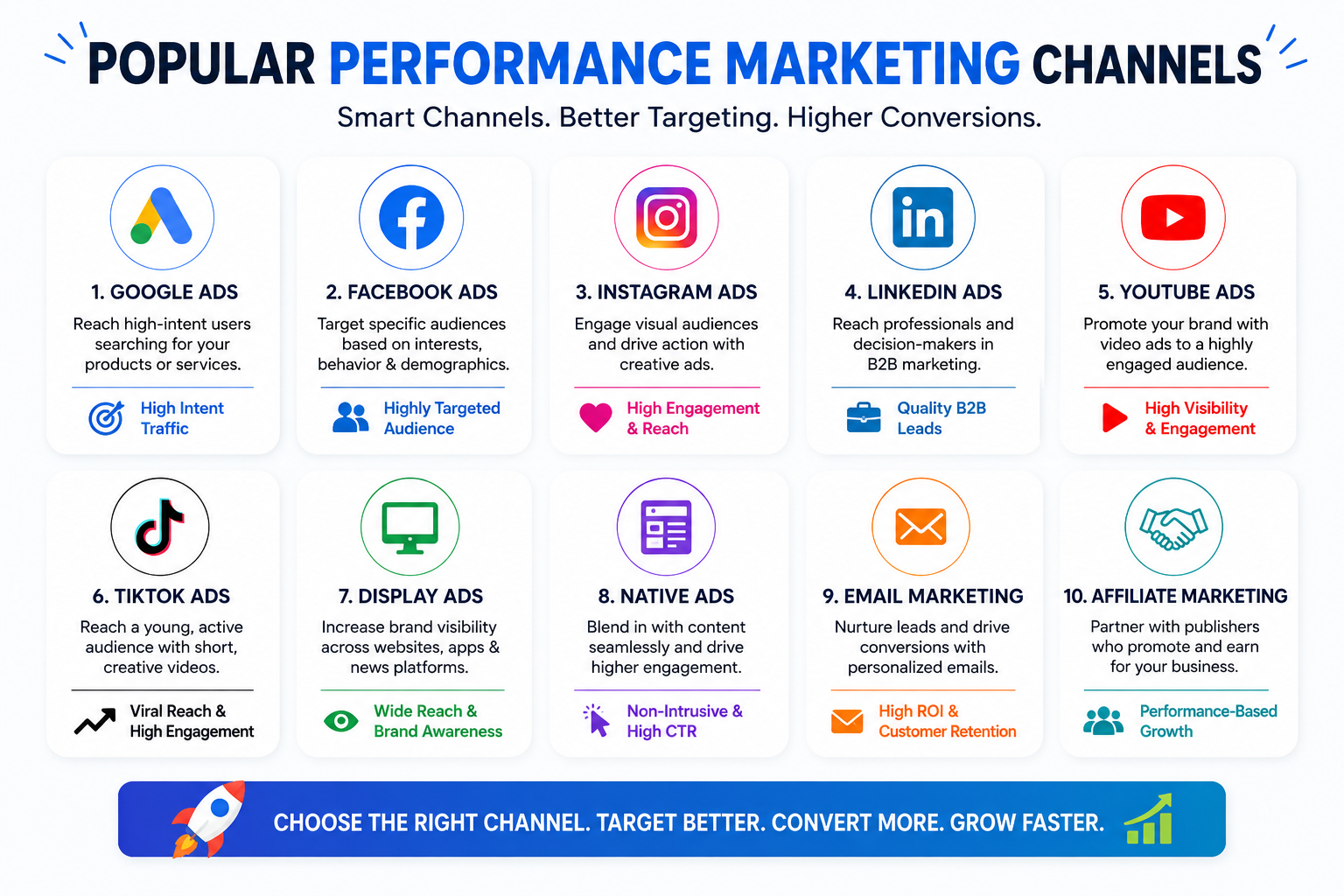
Popular Performance Marketing Channels
-
1. Search Engine Marketing (SEM)
Google Ads is one of the most popular performance marketing platforms. Businesses can run paid advertisements on search engines to attract customers searching for related products or services.
-
2. Social Media Advertising
Platforms like Facebook, Instagram, LinkedIn, and Twitter allow businesses to target users based on interests, age, location, and behavior.
3. Affiliate Marketing
Affiliate marketing allows businesses to partner with influencers, bloggers, or publishers who promote products and earn commissions for successful sales.
4. Email Marketing
Email marketing campaigns help businesses connect directly with customers and improve engagement and conversions.
5. Native Advertising
Native ads blend naturally with website content, improving user experience and increasing engagement rates.
Key Metrics in Performance Marketing
To measure campaign success, marketers focus on important metrics such as:
- CPC (Cost Per Click)
- CPA (Cost Per Acquisition)
- CTR (Click Through Rate)
- ROAS (Return on Ad Spend)
- Conversion Rate
These metrics help businesses understand which campaigns are generating the best results.
-
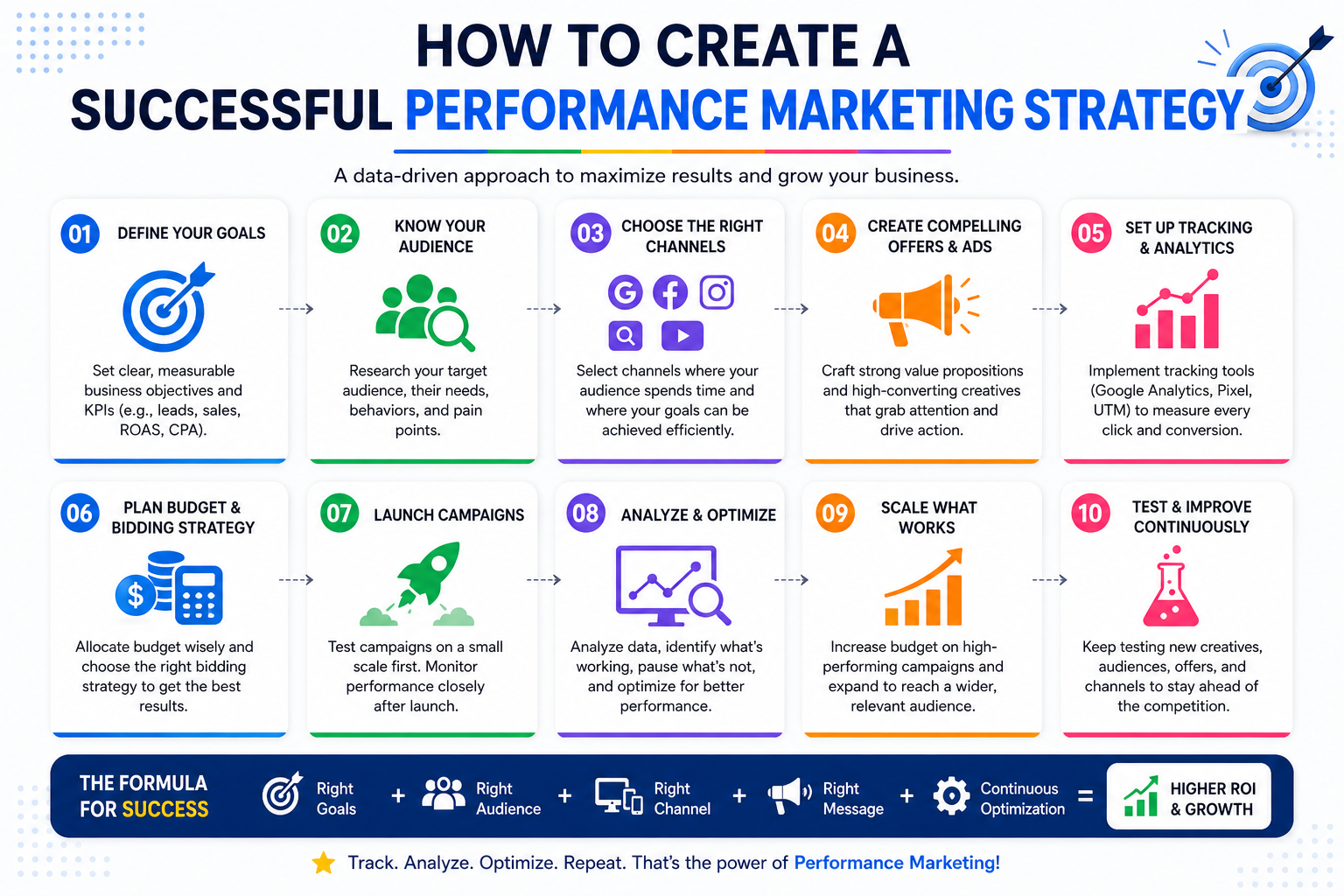
How to Create a Successful Performance Marketing Strategy
-
Define Clear Goals
Before launching campaigns, businesses should identify their goals such as generating leads, increasing sales, or improving brand awareness.
Know Your Target Audience
Understanding customer interests, demographics, and online behavior helps create highly targeted campaigns.
Create High-Quality Content
Good content attracts users and improves engagement. Businesses should focus on valuable and creative content.
Use Data Analytics
Tracking campaign data helps identify successful strategies and areas needing improvement.
Optimize Campaigns Regularly
Performance marketing requires continuous monitoring and optimization for better results.
Future of Performance Marketing
-
Performance Marketing -
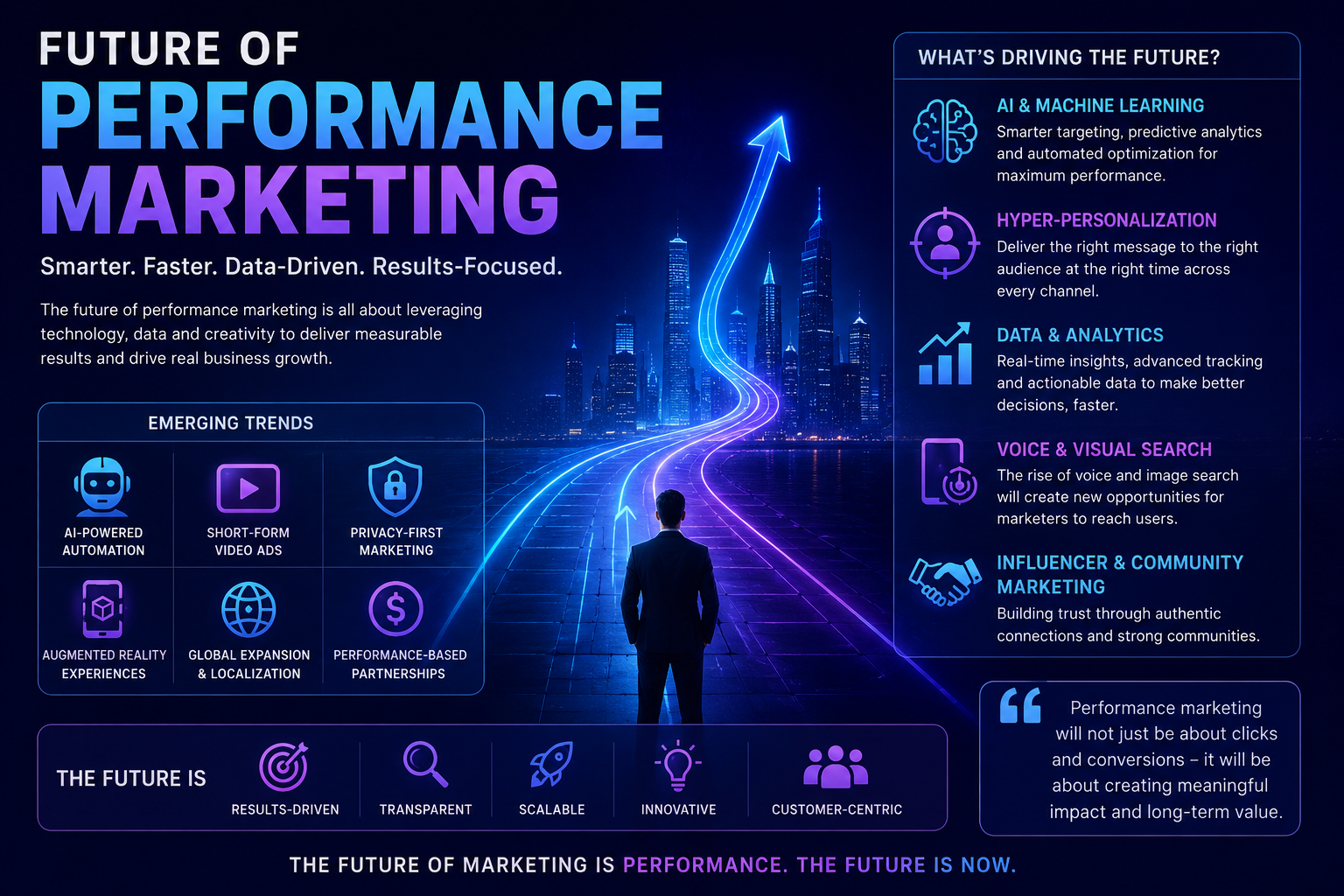
The future of performance marketing looks very promising. Artificial intelligence, automation, and advanced analytics are making campaigns smarter and more effective. Businesses can now personalize ads based on customer behavior and preferences.
Video marketing, influencer marketing, and AI-powered advertising are expected to dominate the future of digital marketing. Brands that invest in performance marketing today will have a strong competitive advantage tomorrow.
-